
PAN India — B2B Distribution Network
PAN India — B2B Distribution Network

Posted on 30th Jun 2026 by Admin
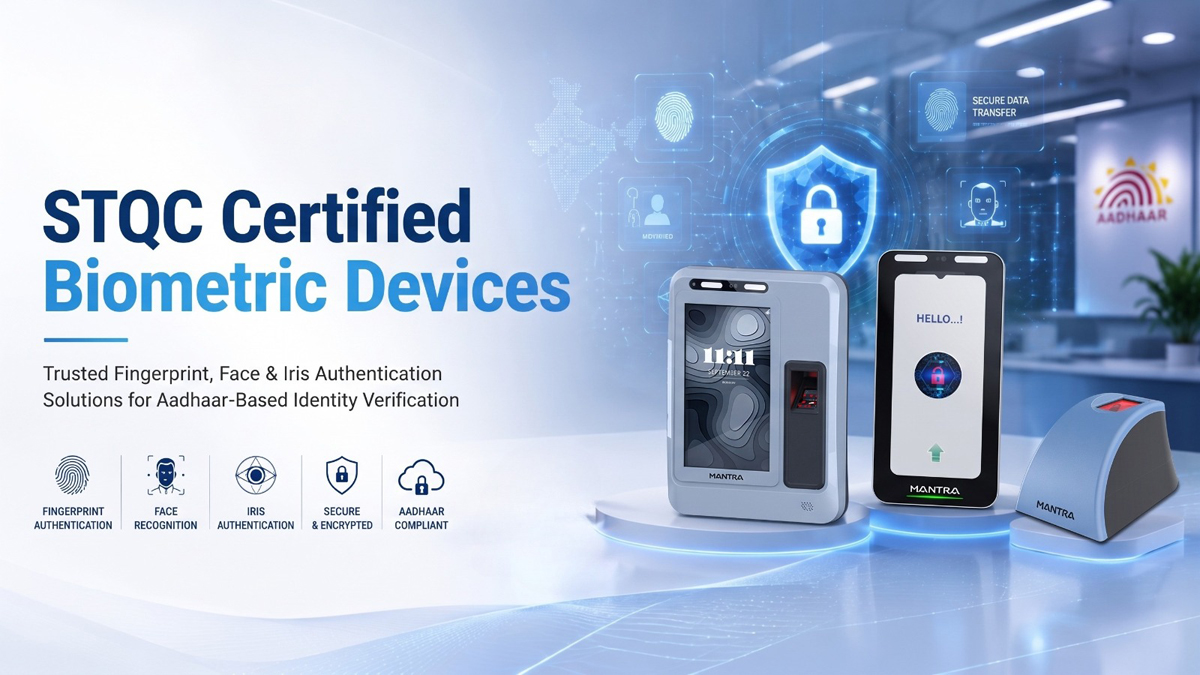
If you have ever looked for a fingerprint scanner for Aadhaar-based verification, you have probably come across the term "STQC certified." Many buyers assume it is just a technical label. In reality, it is a mandatory compliance requirement — and choosing a non-certified device can make your entire system legally invalid.
This guide explains what STQC certification means, why it exists, what happens if you skip it, and how to identify the right certified fingerprint scanner for your use case.
STQC stands for Standardisation Testing and Quality Certification. It is a government body under the Ministry of Electronics and Information Technology (MeitY), Government of India. STQC operates a network of testing laboratories across India that test and certify electronics, software, and IT products against established national and international standards.
In the context of biometric devices, STQC is the authorised testing authority for certifying fingerprint scanners and other biometric hardware used in Aadhaar-enabled services.
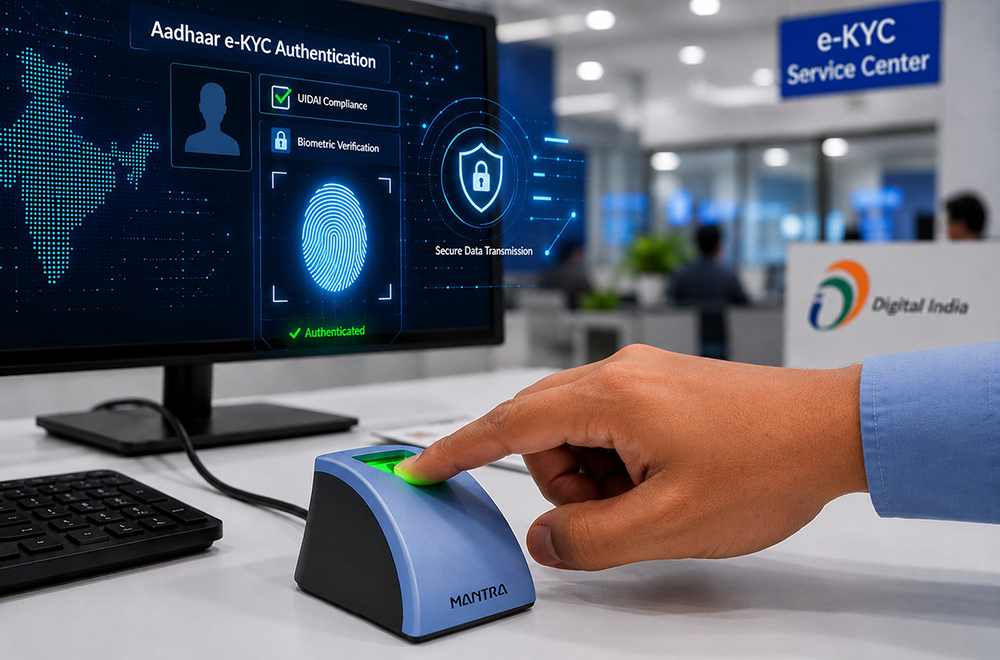
An STQC certified fingerprint scanner is a biometric device that has been tested and approved by STQC laboratories to meet the quality and performance standards set by UIDAI (Unique Identification Authority of India).
UIDAI has defined two levels of biometric device certification:
L0 (Level 0): The biometric processing — fingerprint image capture and matching — happens on an external server or host system. The device itself only captures and transmits the raw image.
L1 (Level 1): The biometric processing happens inside the device itself. The device captures the fingerprint, encrypts the data internally, and sends only the encrypted template. This makes L1 devices significantly more secure and tamper-resistant.
For any Aadhaar authentication use case — whether it is e-KYC, Aadhaar-enabled Payment System (AePS), or government service delivery — only STQC-certified L1 devices are accepted by UIDAI.
If you are deploying fingerprint scanners for Aadhaar-based e-KYC, AePS transactions, or any UIDAI-connected service, you cannot use an uncertified device. UIDAI's API simply rejects authentication requests from non-certified hardware. There is no workaround.
STQC certification tests the fingerprint scanner against FBI-standard image quality benchmarks — specifically the PIV (Personal Identity Verification) standard. A certified scanner must capture fingerprint images at 500 DPI with consistent quality across different skin types, moisture levels, and environmental conditions. An uncertified device may look identical on the outside but consistently produce poor-quality captures that fail matching.
L1 certified devices process and encrypt biometric data inside the hardware itself. This means even if someone intercepts the data transmission between the device and the server, they cannot reconstruct the original fingerprint. This is a non-negotiable requirement for any deployment handling sensitive citizen data.
If you deploy an uncertified device in a government project, banking integration, or healthcare system and a data breach or authentication failure occurs, your organisation carries the legal and financial liability. STQC certification is your compliance shield.
Almost every government tender related to biometric attendance, beneficiary verification, or digital identity includes STQC + UIDAI L1 certification as an eligibility requirement. Without it, your bid is disqualified before evaluation even begins.
Before a fingerprint scanner receives STQC certification, it is tested on multiple parameters:
Image Quality: The device must capture fingerprint images that meet the ANSI/NIST-ITL 1-2011 standard at 500 DPI resolution with correct grayscale depth.
False Acceptance Rate (FAR): The percentage of times the system incorrectly accepts an unauthorised fingerprint. Certified devices must keep this below a defined threshold.
False Rejection Rate (FRR): The percentage of times the system incorrectly rejects an authorised fingerprint. High FRR devices cause user frustration and system failures in high-volume deployments.
Liveness Detection: The device must be able to distinguish between a real finger and a spoofed finger (silicone, gelatin, or printed fingerprint). This prevents biometric fraud.
Encryption Standard: For L1 devices, the internal encryption must meet the hardware security requirements specified by UIDAI.
When evaluating a fingerprint scanner, you may see multiple certifications listed. Here is what each one means:
| Certification | Issuing Body | Requirement For |
|---|---|---|
| STQC | MeitY, India | Aadhaar authentication in India |
| UIDAI L1 | UIDAI | Aadhaar-enabled services |
| FBI PIV | FBI, USA | International biometric standard |
| CE | EU/India | Restriction of hazardous substances |
| BIS | Bureau of Indian Standards | Mandatory for sale in India |
For Indian deployments, STQC + UIDAI L1 is the minimum combination you must verify. FBI PIV certification is a strong additional quality indicator since it confirms the scanner meets one of the strictest international biometric image standards.
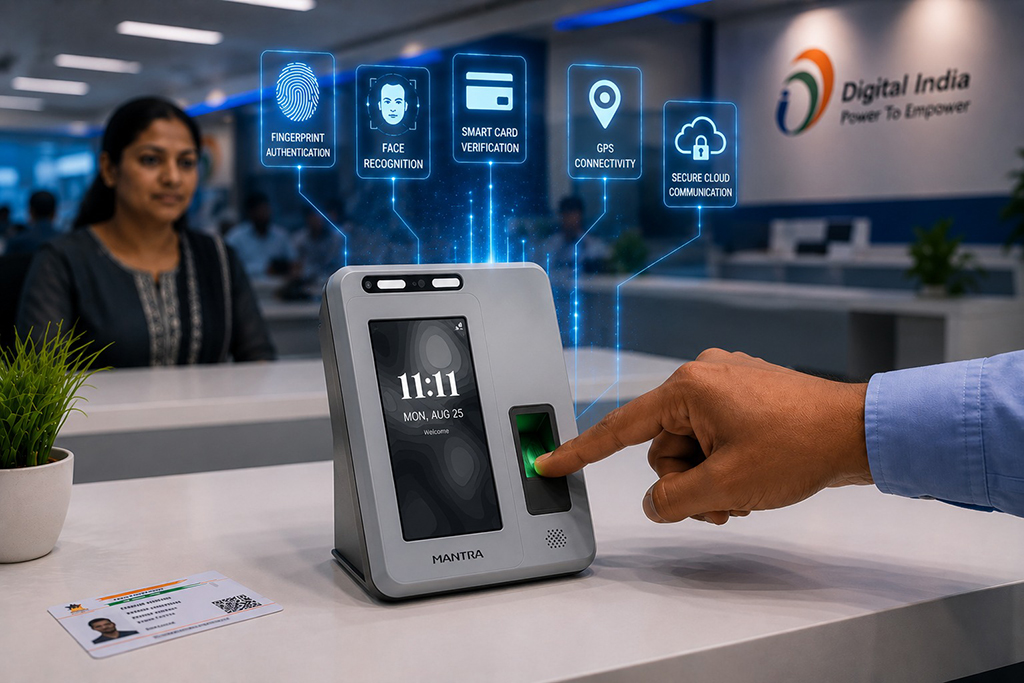
STQC certified devices are not just for government use. Any sector that involves Aadhaar-based identity verification or high-security biometric authentication benefits from certified hardware:
Banking & Financial Services: AePS transactions, account opening with e-KYC, and loan disbursement verifications all require STQC-certified devices.
Government Service Delivery: PDS (ration distribution), MGNREGA attendance, pension disbursement, and voter verification programmes run entirely on UIDAI-certified biometric infrastructure.
Healthcare: Hospitals and clinics using Aadhaar for patient identity verification or Ayushman Bharat empanelment require certified scanners at service delivery points.
Corporate & Enterprise: Large organisations running biometric time attendance linked to HR software or payroll systems benefit from STQC-certified hardware for accuracy and legal standing.
Education: NEET, JEE, and other national examination centres use STQC-certified fingerprint scanners for candidate identity verification.
Before purchasing, ask the supplier for the following documentation:
STQC Test Report: The official test report issued by an STQC laboratory confirming the device model has been tested.
UIDAI Approved Device List: UIDAI maintains a publicly available list of approved biometric devices. You can cross-check the device model name and version number on the UIDAI portal.
Device Firmware Version: Certification is tied to specific firmware versions. Ensure the firmware running on the device matches the certified version — an update can sometimes affect certification status.
Manufacturer Declaration: Reputed manufacturers provide a Declaration of Conformity (DoC) confirming the device meets STQC and UIDAI L1 requirements.
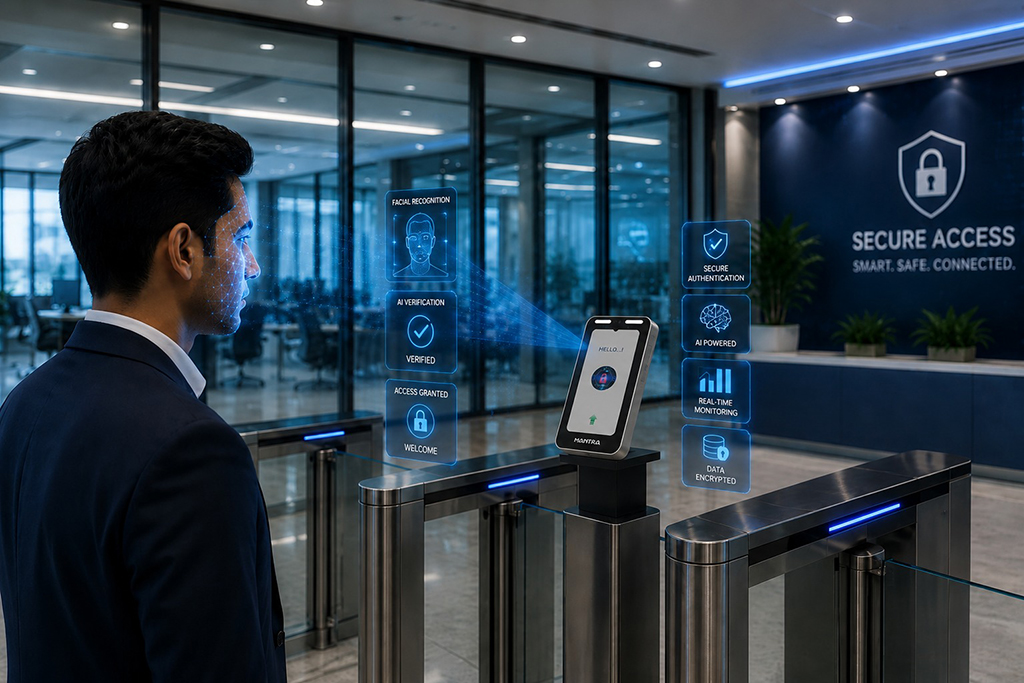
One of the most widely deployed STQC certified fingerprint scanners in India is the Mantra MFS110, available through Mivanta's distribution network.
The MFS110 is an L1 biometric device certified by STQC, UIDAI L1, and FBI PIV. It uses an optical FAP10 sensor that captures fingerprint images at 500 DPI with 276 × 336 pixel resolution. The device includes hardware-based encryption and is compatible with all major Aadhaar authentication APIs.
Key certifications on the MFS110: CE, FCC, RoHS, STQC, UIDAI L1, FBI PIV, EN/IEC 62368-1, and IS13252 Part II.
It is one of the most trusted choices for government integrators, banking kiosks, and enterprise deployments across India.
For applications requiring multi-modal biometrics — face recognition combined with fingerprint and smart card support — the MBAS40 by Mantra includes the same STQC-certified MFS110 sensor along with an 8MP face recognition camera, 4G connectivity, and GPS — making it ideal for field deployments in smart city and government projects.
Both devices are available through Mivanta's Aadhaar Biometric Scanner catalogue, specifically under the Fingerprint Scanner category.
Buying on price alone: Uncertified devices are cheaper. But if your deployment requires Aadhaar authentication and you purchase a non-certified device, you have wasted the entire budget — the device simply will not work with UIDAI systems.
Not checking firmware version: A device model may be certified, but an older firmware version on the unit you receive may not be. Always verify the firmware version matches the UIDAI approved list.
Ignoring FAP level: FAP (Fingerprint Acquisition Profile) 10, 20, 30, and 60 refer to the size of the fingerprint sensor platen. Smaller FAP levels (FAP10) are suitable for standard use. Higher FAP levels are required for forensic or high-security government applications. Match the FAP level to your use case before purchasing.
Assuming USB means plug-and-play: STQC certified scanners require specific SDK integration. Confirm that the device SDK is compatible with your existing application or that integration support is available.
It is mandatory only for devices used in Aadhaar-enabled services. For non-Aadhaar use cases like standalone office access control, STQC certification is not legally required — though it is still a strong quality indicator.
No. UIDAI mandates L1 certified devices for all Aadhaar authentication transactions since 2019. L0 devices are no longer accepted.
STQC certification is tied to device model and firmware version, not a time period. However, UIDAI periodically reviews and updates the approved device list. Always check the current UIDAI approved device list before procurement.
Through authorised distributors of certified brands. Mivanta distributes Mantra biometric devices — one of India's most trusted STQC-certified brands — through its B2B distribution network across India. You can explore the full range on the Fingerprint Scanner page or contact the Mivanta team directly.
STQC certification is not a marketing label — it is a technical and legal requirement for biometric deployments involving Aadhaar in India. It guarantees image quality, data security, and compliance with UIDAI standards. Before purchasing any fingerprint scanner for authentication, identity verification, or government projects, always verify STQC + UIDAI L1 certification and cross-check the device on the official UIDAI approved list.
If you are looking for certified fingerprint scanners for your next project, explore Mivanta's range of Aadhaar Biometric Scanners or reach out to the team for B2B pricing and bulk supply.

Subscribe to our emails about secure life. No spam.