
PAN India — B2B Distribution Network
PAN India — B2B Distribution Network

Posted on 23rd Jun 2026 by Admin
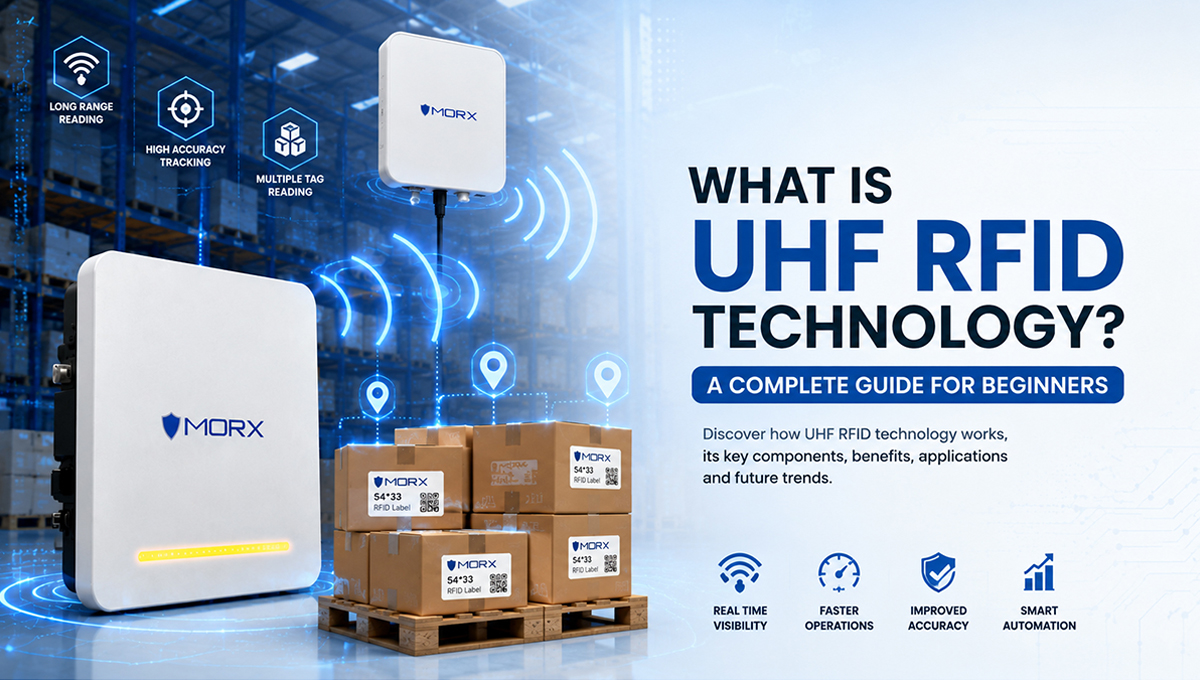
In today's fast-paced business environment, organizations are under constant pressure to improve operational efficiency, maintain accurate inventory records, reduce manual processes, and gain real-time visibility across their operations. Traditional tracking methods such as manual data entry and barcode scanning have served businesses for years, but they often require line-of-sight scanning, significant labor effort, and can be prone to human errors.
Ultra High Frequency Radio Frequency Identification (UHF RFID) technology has emerged as one of the most effective solutions for automated identification and tracking. It enables businesses to identify, locate, and monitor thousands of assets, products, and inventory items quickly and accurately without direct contact or manual scanning.
From warehouses and manufacturing plants to retail stores and logistics hubs, UHF RFID technology is helping organizations streamline operations, improve accuracy, and make data-driven decisions. Understanding how this technology works and where it can be applied is essential for businesses looking to embrace automation and digital transformation.
UHF RFID (Ultra High Frequency Radio Frequency Identification) is a wireless technology that uses radio waves to automatically identify and track tagged objects. Unlike barcode systems, RFID does not require a direct line of sight between the scanner and the item being scanned. This allows multiple items to be identified simultaneously, significantly improving speed and efficiency.
UHF RFID operates within a frequency range typically between 860 MHz and 960 MHz, providing longer read distances and faster data transfer rates compared to other RFID frequency bands. The technology consists of RFID tags attached to items, RFID readers that communicate with those tags, antennas that transmit and receive signals, and software that processes and manages the collected data.
The ability to automate identification and tracking processes makes UHF RFID a valuable technology for inventory management, asset tracking, supply chain visibility, access control, and industrial automation.
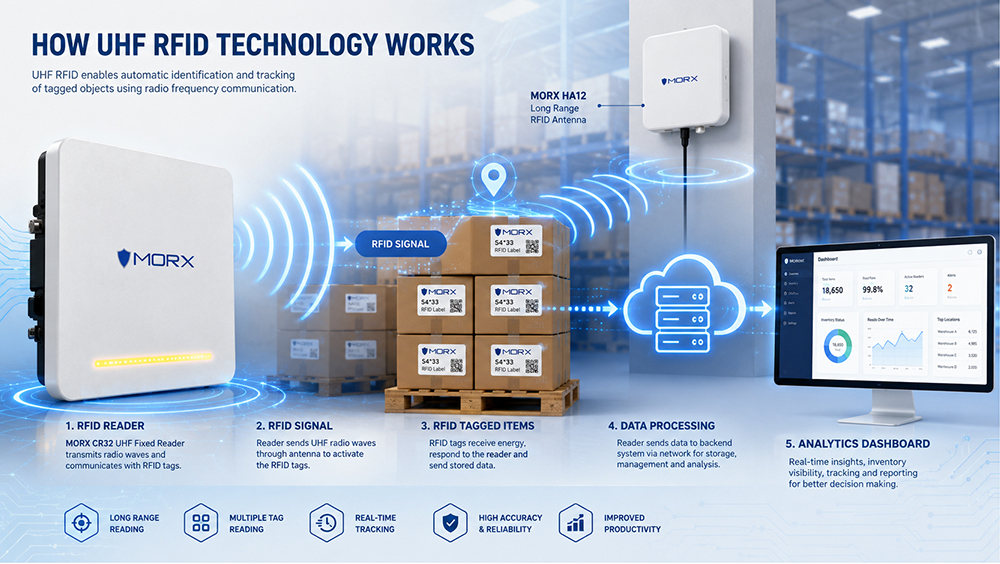
The operation of a UHF RFID system is based on communication between RFID readers and RFID tags using radio frequency signals.
An RFID reader generates radio waves through an antenna. When an RFID tag enters the reader's coverage area, the tag receives energy from the transmitted signal. Passive RFID tags, which are the most commonly used type, do not require their own power source and are energized by the reader's signal.
Once activated, the tag transmits its stored information back to the reader. This information may include a unique identification number, product details, asset information, location data, or other business-specific records.
The RFID reader then sends this information to software applications where it can be analyzed, stored, and integrated with inventory management systems, ERP platforms, warehouse management systems, or asset tracking software.
This entire process occurs within milliseconds and allows hundreds of tags to be read simultaneously, making UHF RFID significantly faster than traditional barcode scanning.
A complete UHF RFID solution consists of several interconnected components that work together to deliver automated tracking and identification capabilities.
RFID tags are attached to products, equipment, assets, pallets, cartons, or other items that need to be tracked. Each tag contains a microchip and an antenna capable of storing and transmitting data.
Depending on the application, RFID tags may be available in different formats such as labels, hard tags, on-metal tags, or industrial-grade tags designed for harsh environments.
RFID readers are responsible for communicating with RFID tags. They send radio signals, receive responses from tags, and transfer collected information to software systems.
Readers are available in fixed, handheld, desktop, and integrated configurations depending on business requirements.
Antennas enable communication between readers and tags by transmitting and receiving radio frequency signals. The placement and type of antenna play a critical role in determining read range and system performance.
Software platforms collect, process, and analyze RFID data. These systems provide real-time visibility into inventory, assets, and operational activities while enabling integration with other business applications.
One of the primary reasons for the growing adoption of UHF RFID is its ability to provide fast, accurate, and automated data collection.
UHF RFID systems can identify tags from several meters away, making them ideal for warehouse, logistics, and industrial environments.
Unlike barcode systems that require individual scanning, RFID can read multiple tags at the same time.
RFID technology eliminates the need for physical contact between the reader and the tagged item.
Organizations can monitor assets, inventory, and operational processes in real time.
Automated data capture significantly reduces human errors associated with manual processes.
Businesses can complete inventory counts, stock verification, and asset audits much faster.
RFID systems can be expanded easily as business operations grow.
Understanding technical specifications is important when evaluating RFID solutions for a specific business application.
UHF RFID typically operates between 860 MHz and 960 MHz depending on regional regulations and deployment requirements.
The read range depends on factors such as reader power, antenna configuration, tag type, and environmental conditions. Modern systems can achieve reading distances exceeding several meters.
RFID tags contain memory sections that store identification and application-specific data.
Many RFID readers can process hundreds of tags per second, making them suitable for high-volume environments.
Most UHF RFID systems follow EPC Gen2 standards to ensure compatibility and interoperability between devices from different manufacturers.
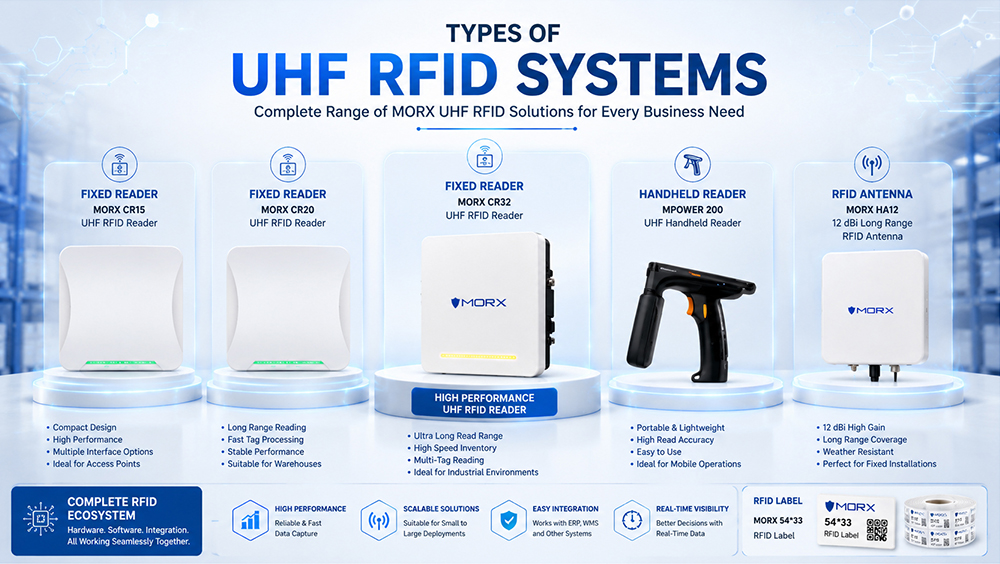
Different RFID system configurations are available to meet specific operational requirements.
These systems are permanently installed at strategic locations such as warehouse entrances, production lines, and loading docks.
Portable RFID readers allow staff to perform inventory audits, stock verification, and asset tracking activities efficiently.
RFID gates automatically track the movement of tagged items passing through designated checkpoints.
These solutions are commonly used for parking management, toll collection, and vehicle access control.
Designed for demanding environments, industrial RFID solutions support manufacturing operations, asset tracking, and process automation.
Organizations across various industries are implementing RFID systems because of the significant operational and financial benefits they offer.
RFID provides real-time inventory visibility and helps eliminate discrepancies caused by manual tracking.
Automated data collection reduces the time required for inventory management and asset tracking activities.
Businesses can lower labor costs and minimize losses associated with inventory inaccuracies.
Organizations gain complete visibility into asset locations, usage patterns, and movement history.
RFID enables real-time monitoring of goods as they move through the supply chain.
Unauthorized movement of assets can be detected immediately, improving overall security.
Accurate and timely data enables management teams to make informed operational decisions.
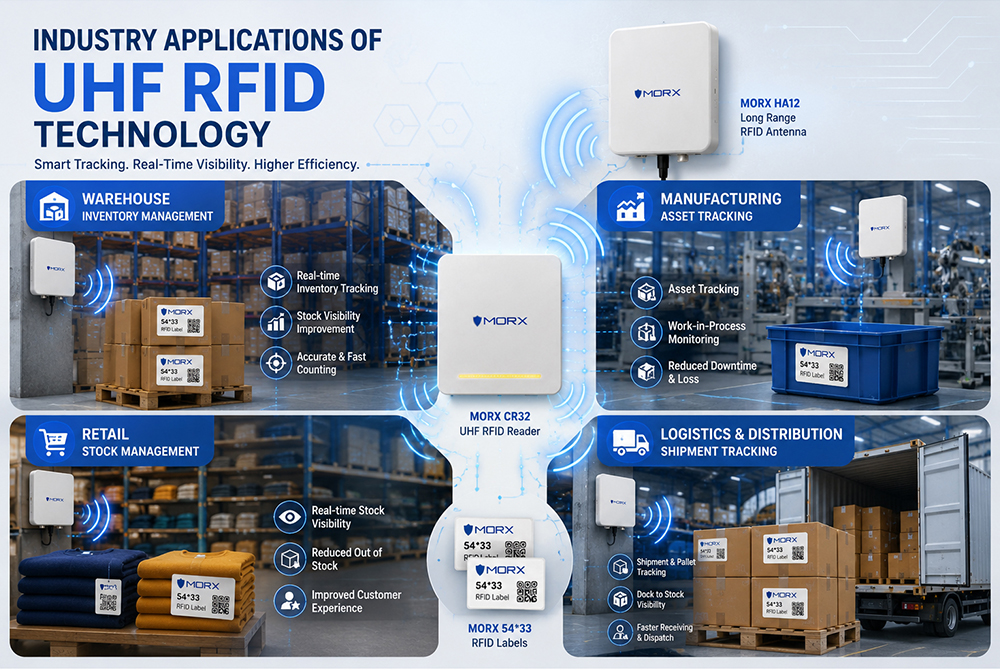
RFID helps automate receiving, storage, picking, shipping, and inventory management processes.
Manufacturers use RFID to track raw materials, work-in-progress items, tools, equipment, and finished products.
Retail businesses leverage RFID for inventory visibility, stock replenishment, and loss prevention.
RFID improves shipment tracking, fleet visibility, and supply chain efficiency.
Hospitals and healthcare facilities use RFID to track medical equipment, supplies, and critical assets.
Schools and universities implement RFID for asset management, attendance tracking, and access control.
Government agencies use RFID for asset tracking, document management, and security applications.
RFID supports access management, visitor tracking, and building security systems.
While RFID technology offers numerous advantages, successful implementation requires proper planning.
Environmental factors such as metal surfaces and liquids can affect signal performance. Incorrect reader placement may reduce reading accuracy, while selecting unsuitable RFID tags can impact overall system effectiveness.
Conducting site surveys, choosing the correct hardware, and working with experienced solution providers can help overcome these challenges.
Businesses planning to implement RFID technology should begin by clearly defining their objectives and operational requirements.
A pilot deployment should be conducted before a full-scale rollout to evaluate performance and identify potential issues. Selecting the right RFID tags, readers, and antennas is critical to achieving desired results.
Organizations should also ensure seamless integration with existing software systems and provide adequate training to employees who will use the technology.
Regular monitoring and optimization can further improve system performance and return on investment.
The future of RFID technology is closely linked with advancements in artificial intelligence, cloud computing, the Internet of Things (IoT), and smart automation.
AI-powered analytics will enable businesses to derive deeper insights from RFID-generated data. Cloud-based RFID platforms will simplify deployment and remote management. IoT integration will create connected ecosystems where assets, equipment, and systems communicate in real time.
Contactless identification, mobile credentials, predictive analytics, and smart building technologies are expected to further expand the role of RFID across industries.
As digital transformation initiatives continue to accelerate, RFID technology will play an increasingly important role in helping organizations improve visibility, efficiency, and operational control.
UHF RFID technology has transformed the way businesses track, identify, and manage assets, inventory, and operational processes. By enabling fast, accurate, and contactless data collection, RFID helps organizations reduce manual effort, improve accuracy, and enhance productivity.
Whether implemented in warehouses, manufacturing facilities, retail stores, healthcare institutions, or logistics operations, UHF RFID provides real-time visibility and automation capabilities that support better business performance.
As emerging technologies such as AI, IoT, and cloud computing continue to evolve, the adoption of UHF RFID is expected to grow rapidly. Organizations seeking to improve operational efficiency, strengthen asset visibility, and build smarter business processes can benefit significantly from investing in modern RFID solutions.

Subscribe to our emails about secure life. No spam.