
PAN India — B2B Distribution Network
PAN India — B2B Distribution Network

Posted on 2nd Apr 2022 by Vinod Rathore
Since its inception in the 14th century, the biometric system has gone through continuous transformations to become the most robust security solution. Organisations use biometric fingerprint because it promises high-level security to their assets, information and valuables. Despite the entry of numerous biometric modalities into the security market, the popularity of biometric fingerprint technology remained intact. It has revolutionised the way persons are recognised, confirmed, and authenticated due to their uniqueness and consistency over time.
It is difficult to discuss all the biometrics modalities in an article; therefore, this blog sheds light on fingerprint biometrics and how they streamline the access control system. Let's first understand biometrics with the most fundamental question.
Biometrics is a person's unique physical and behavioural features that make identification, verification and authentication possible. Fingerprintsiris, retina, voice, face are a few examples of biometrics. Leveraging biometrics to verify a person's identity leads to several uses cases. Attendance and access control management are well-known use cases of biometric recognition technology.
Biometric fingerprint recognition is a physical approach for identifying, verifying, or authenticating an individual based on their unique finger traits. You may be surprised to know that even identical twins exhibit diverse patterns, which indicates the degree of uniqueness of fingerprints.
The process of biometric fingerprint recognition begins with the scanning of fingerprint traits. Software analysis these traits and compares them to a database of registered fingerprints. The system offers access to the user if the match is successful.
The Fingerprint matching techniques include two categories: minutiae-based matching and pattern matching.
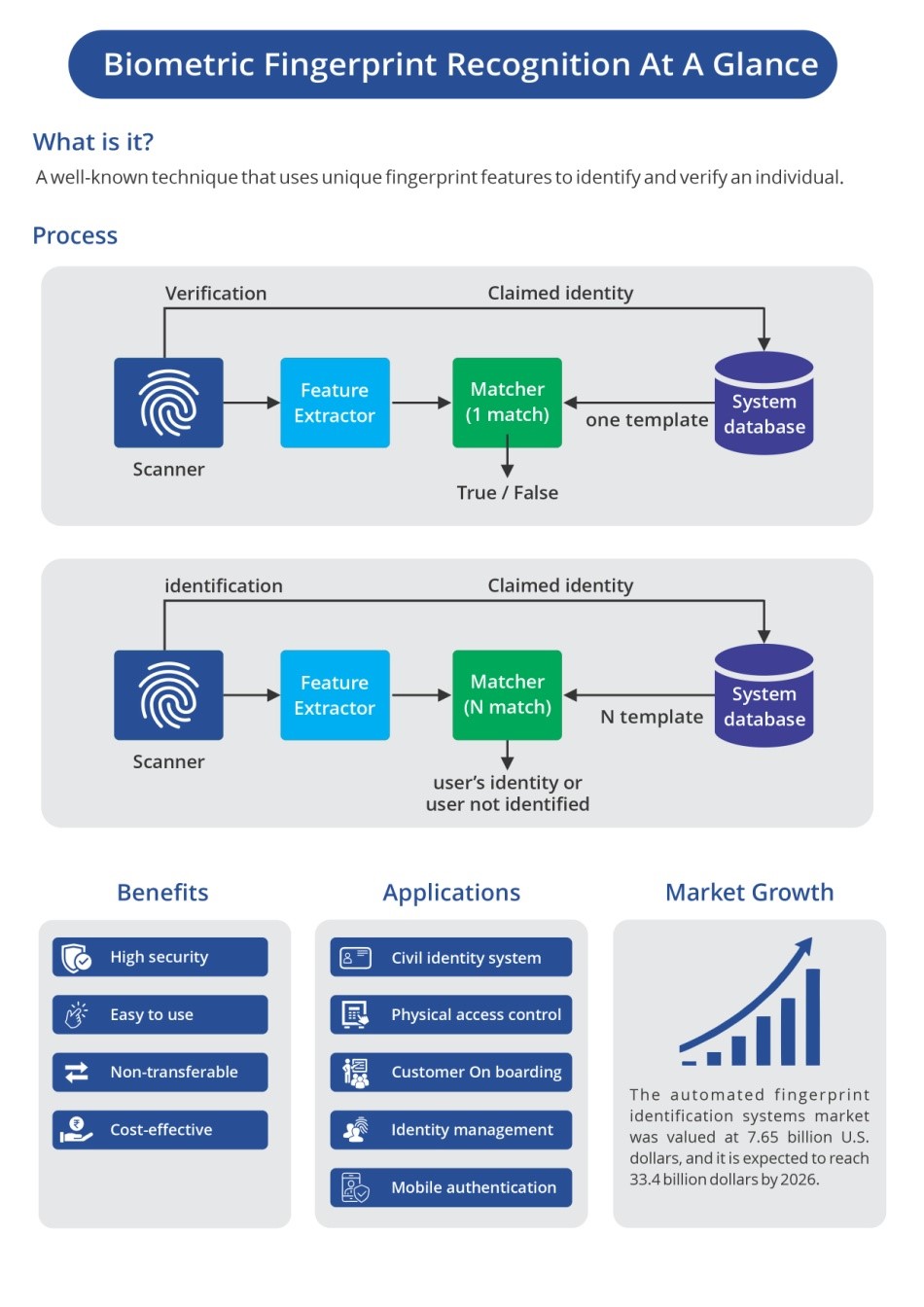
Biometrics is incomplete without discussing fingerprint scanners. The fingerprint scanner is a device that captures the fingerprint so that software can analyse it. With its growing popularity, biometrics companies are working on designing advanced fingerprint sensors or readers to streamline the access control process. Modern fingerprint scanners can take a clear image of a finger regardless of whether it is scarred, moist or even aged.
The three most common fingerprint devices are optical, capacitive, and ultrasonic scanners.
The fingerprint-backed access control system helps your office tackle security threats while keeping costs down. Below are the advantages that you can't ignore.
Biometric fingerprint identification technology is evolving, making it an ideal solution to tackle evolving security threats. It has a stronghold in areas: corporate, border security control, banks, and educational institutes. As per Statista, the global biometric system will grow in the coming years, reaching a size of 68.6 billion U.S. dollars by 2025. In response to these encouraging statistics, biometric businesses are working on making the technology more convenient and safe.
ARE YOU IN SEARCH OF THE BEST FINGERPRINT-BASED ACCESS CONTROL SYSTEM?
MIVANTA IS JUST A CLICK AWAY Let's Connect

Subscribe to our emails about secure life. No spam.