
PAN India — B2B Distribution Network
PAN India — B2B Distribution Network

Posted on 6th Aug 2026 by Admin
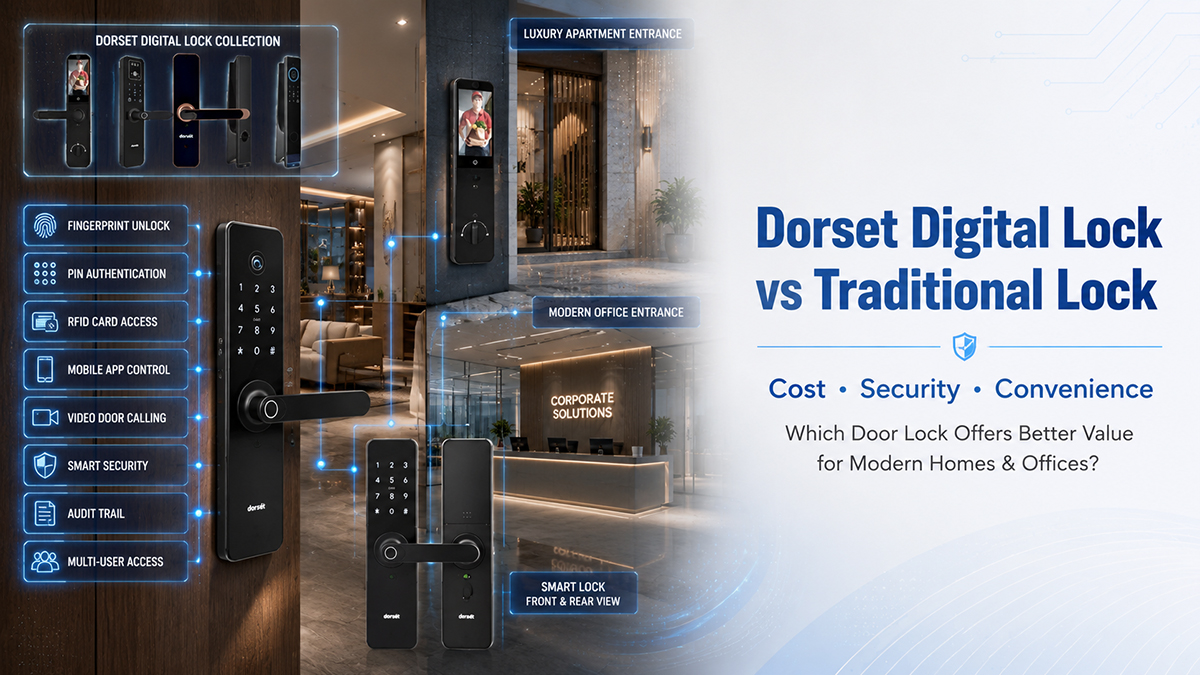
Every homeowner and office manager eventually has this conversation with themselves at the hardware counter: stick with the mechanical lock that's worked for decades, or move to a digital lock that promises fingerprint access and a mobile app. The honest answer isn't "digital is always better" — it depends on what you're actually optimizing for. This comparison breaks down the three factors that actually matter: what each option costs over time, how secure each one really is, and which one fits daily life better.
A traditional mechanical lock — a standard mortise or rim lock operated by a physical key — has one job and does it reliably: it requires a matching key to open. No battery, no software, no learning curve. This simplicity is also its biggest limitation. Every key that exists for that lock is a potential point of failure. Lost keys, duplicated keys given to a departed employee or ex-tenant, or a locksmith who kept a spare — all of these represent access you can no longer track or revoke without physically changing the lock cylinder.
A Dorset digital lock replaces or supplements the key with electronic authentication — fingerprint, PIN, RFID card, or a mobile app — while typically retaining a mechanical key as backup. The Dorset DG 905, for example, supports five access modes in one unit: fingerprint ID, password, RFID card, mechanical key, and Wi-Fi-based mobile access, with an optional video door phone connection. It also includes dual authentication, an audit trail of every entry, and alarms for low battery, fire detection, and intrusion attempts.
This multi-mode design is the real shift from traditional locks — it's not just "no key," it's a system that logs who entered and when, and lets an owner revoke one person's access (say, a fingerprint enrollment) without affecting anyone else's.
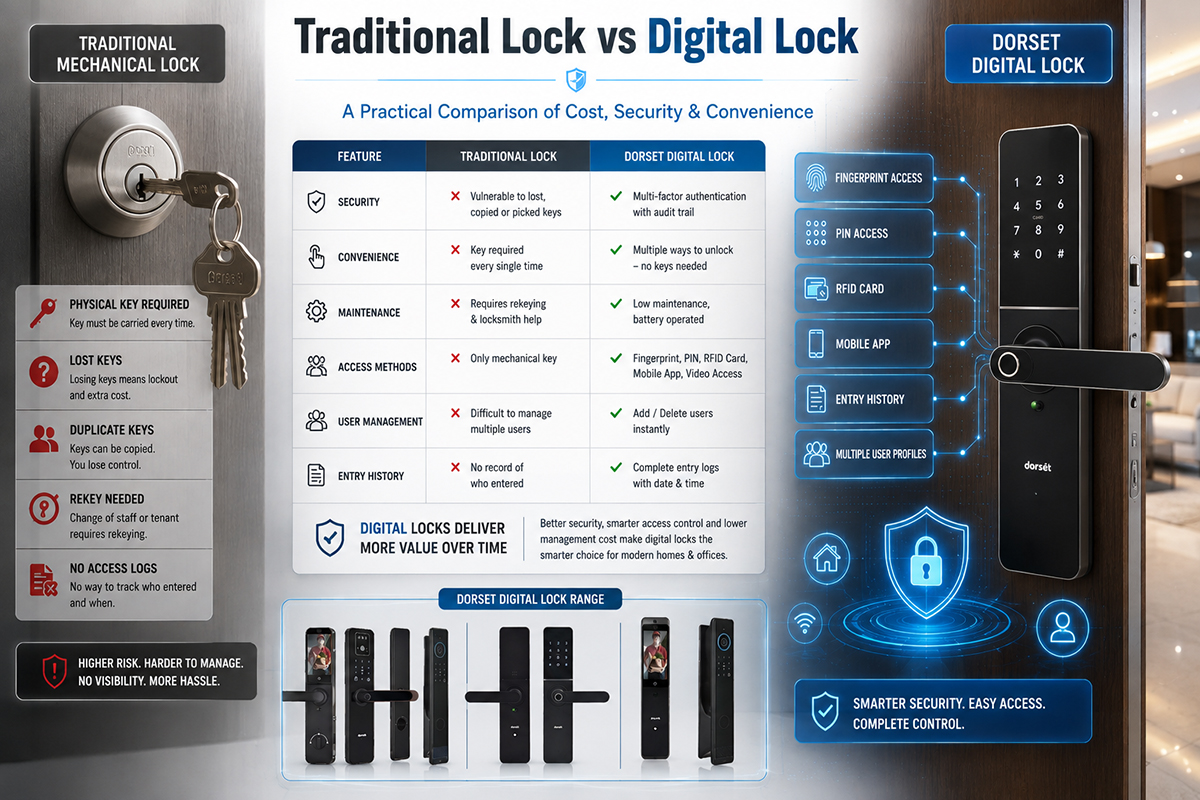
Upfront cost is where traditional locks clearly win. A basic mechanical mortise lock costs a fraction of a digital lock's price. Digital locks carry the cost of the electronics, biometric sensor, and battery system on top of the physical lock mechanism.
Hidden and recurring costs tell a different story. A traditional lock's ongoing cost shows up unpredictably — a locksmith call-out for a lost key, rekeying the entire lock after an employee or tenant leaves, or replacing a worn mechanical cylinder. A digital lock's ongoing cost is more predictable: periodic battery replacement (most units alert well before the battery dies) and, occasionally, warranty service on the electronic module.
The real cost comparison isn't the sticker price — it's the sticker price plus what happens the first time you lose a key or need to remove someone's access. For a single residential main door, a traditional lock's occasional locksmith cost may stay lower over several years. For an office, rental property, or any door where access needs to change regularly (staff turnover, tenant changes), a digital lock's ability to revoke and re-enroll access without a physical rekey often makes it the cheaper option over time, not the more expensive one.
Neither lock type is automatically "more secure" — each has a different failure mode.
Traditional locks fail through the key itself — lock picking, bumping, or an untracked duplicate key are the primary vulnerabilities. A mechanical lock has no way to tell you it was accessed at 2 AM by someone with a copied key; there's simply no record.
Digital locks fail through the electronics or the credential — a weak PIN, a compromised mobile app account, or (rarely, in a poorly designed product) a vulnerable Bluetooth/Wi-Fi connection. What digital locks add that mechanical locks structurally cannot: an audit trail. The DG 905's logged entry history and dual-authentication requirement mean that even if one credential is compromised, a second factor is still required, and every attempt — successful or not — is recorded.
Fire and emergency alarms are a security dimension traditional locks don't address at all. Built-in fire detection and intrusion alarms on a digital lock provide an added layer that a purely mechanical lock has no way to offer, since it has no sensors of any kind.
For a security-conscious buyer, the honest conclusion is: a well-built digital lock with dual authentication and audit logging closes gaps that mechanical locks cannot address by design — but a cheap or poorly implemented digital lock can introduce new failure points a good mechanical lock never had. Brand and build quality matter more here than the digital-vs-mechanical category itself.
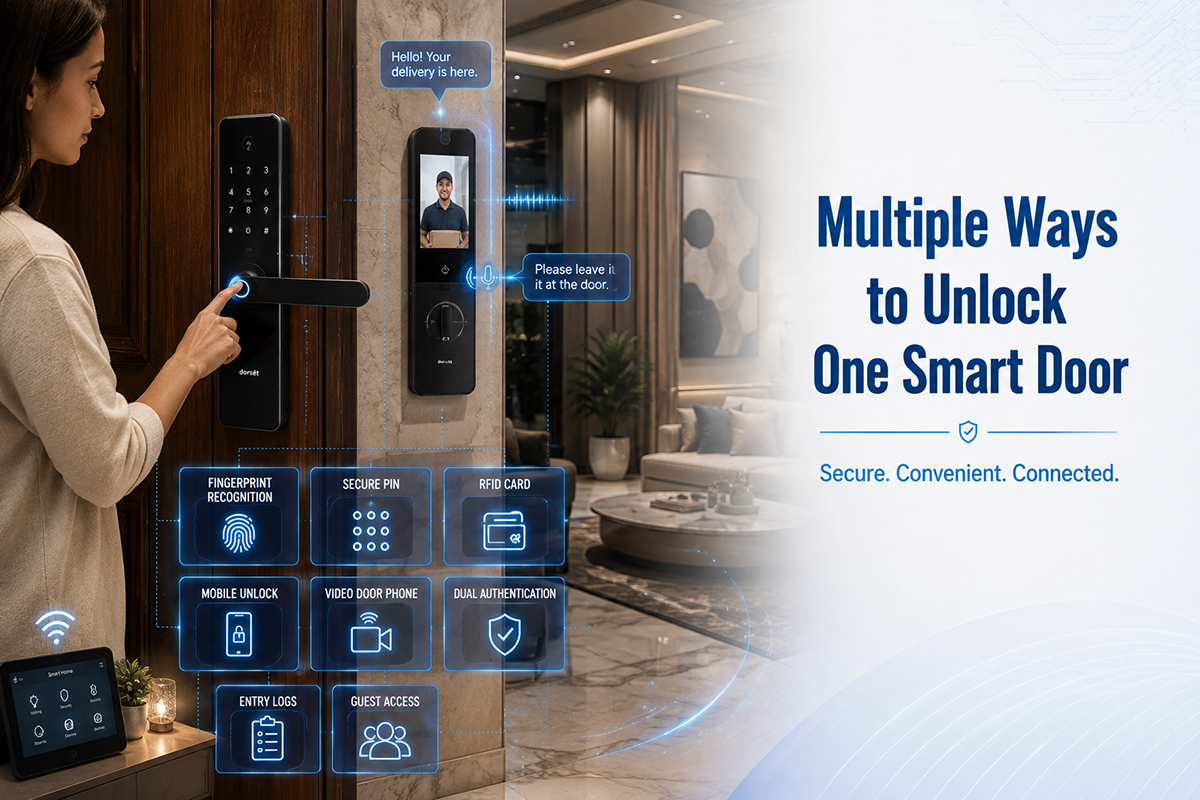
This is where the gap is least ambiguous. A traditional lock requires a physical key every single time — no keys, no entry, regardless of the reason (hands full, kids locked out, forgotten keys at the office).
A digital lock removes that single point of failure. Fingerprint or PIN access means forgetting a key is no longer a lockout scenario. RFID card access suits offices issuing access cards to staff. Mobile app access, as supported on the DG 905, allows remote monitoring and, depending on the model, remote unlock — useful for granting temporary access to a guest, contractor, or delivery without a physical key ever changing hands.
For homes and offices with more than one regular user — a family, a small team, a rental property with rotating tenants — this convenience compounds. Managing five different physical keys is harder than managing five fingerprint enrollments on one digital lock, especially when someone needs to be removed from access.
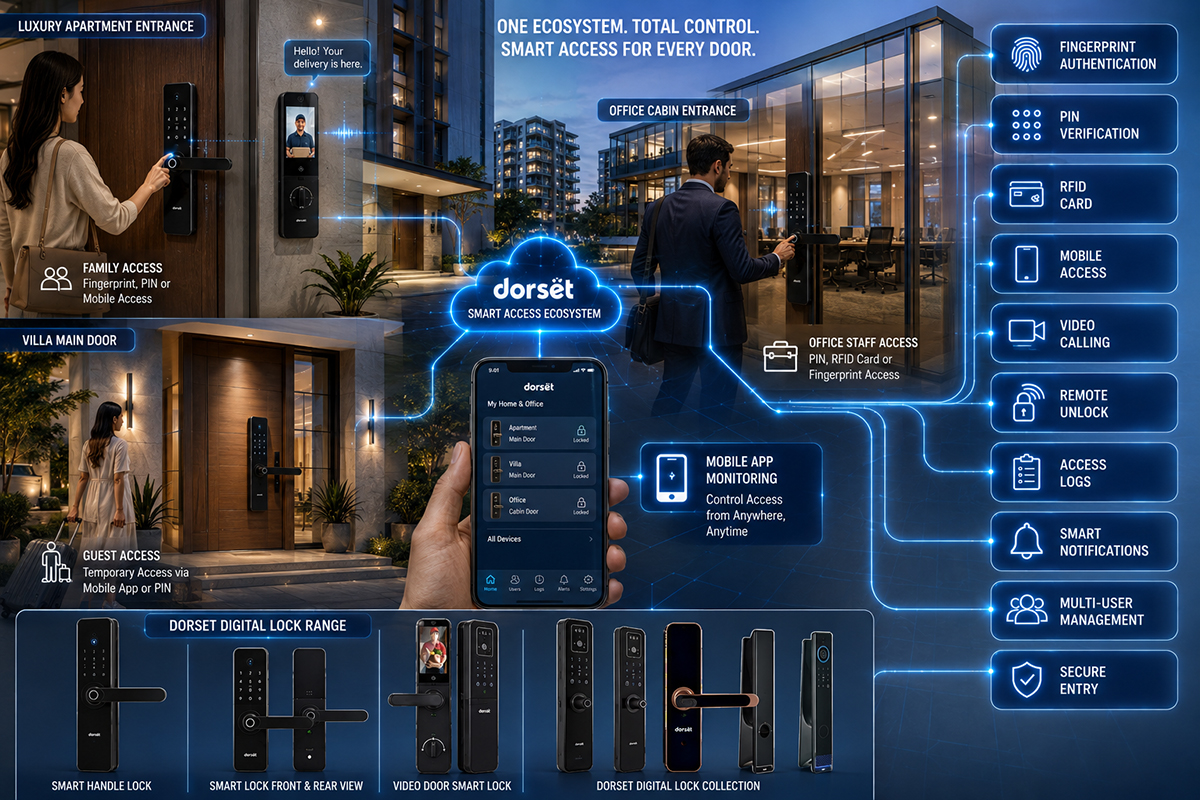
Not every door needs a digital lock. Low-traffic doors, storage rooms, or secondary access points where the cost of a digital lock isn't justified by the access-management benefit are often better served by a simple, reliable mechanical lock. For a main entrance with regular multi-person access — the case where digital locks earn their keep — models like the Dorset DG 102 and DG 104 offer different feature tiers depending on budget and required access modes.
For glass doors specifically, where a standard rim or mortise lock doesn't apply, Mivanta's digital glass door lock range covers the same digital access benefits in a form factor built for frameless or glass entry doors.
Day-to-day maintenance is lower — mainly periodic battery replacement, which most units warn about well in advance. Traditional locks have lower routine maintenance but carry unpredictable costs when a key is lost or access needs to be revoked, since that typically means a full rekey.
Most Dorset digital locks, including the DG 905, retain a mechanical key as one of their access modes specifically for this situation — so a dead battery doesn't lock you out, provided the physical key backup is kept accessible.
It depends on build quality rather than the category itself. A well-built digital lock with dual authentication and audit logging addresses gaps — like untracked duplicate keys — that a mechanical lock cannot. A poorly made digital lock can introduce its own vulnerabilities, so brand and implementation quality matter more than the digital-vs-mechanical choice alone.
Fingerprint, PIN, RFID, and mechanical key access all work without any internet connection. Wi-Fi is only required for the mobile app and remote monitoring features, which are additional conveniences rather than requirements for daily use.
Mivanta supplies the complete Dorset digital lock range to B2B buyers, builders, and system integrators across India. Explore the Dorset brand range or the broader Smart Lock category to compare models by access mode and door type.

Subscribe to our emails about secure life. No spam.