
PAN India — B2B Distribution Network
PAN India — B2B Distribution Network

Posted on 29th Aug 2026 by Admin
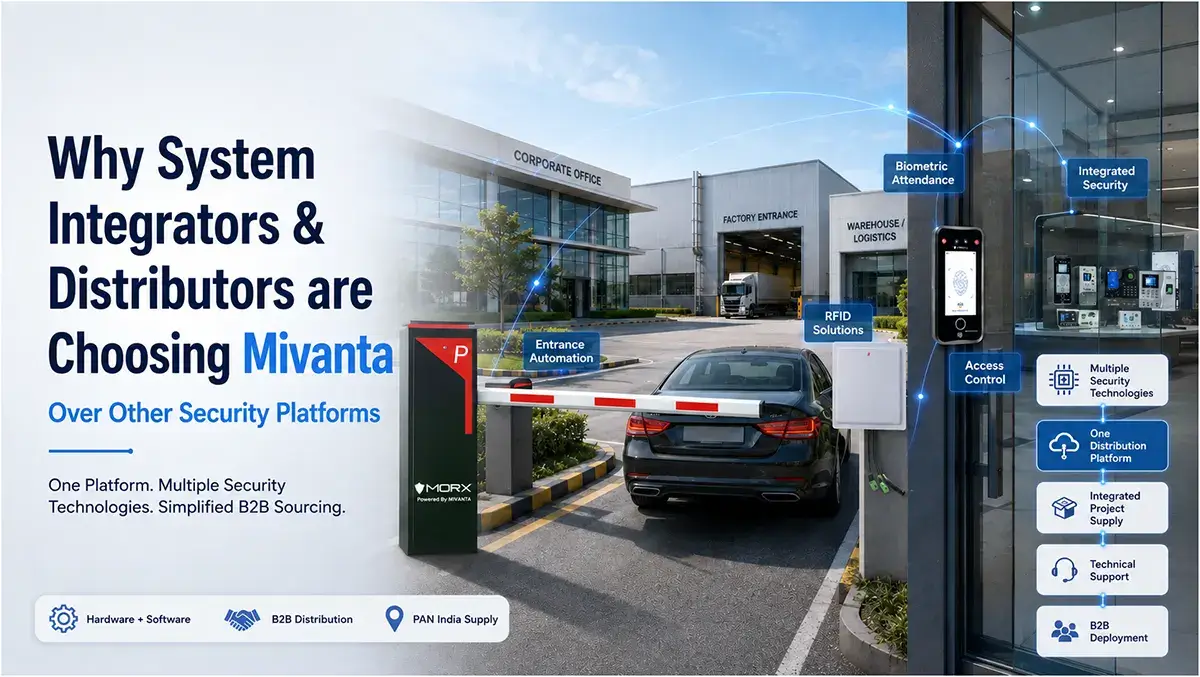
Most system integrators and security dealers didn't set out to manage six different vendor relationships for one client project. It happens gradually — a boom barrier from one supplier, biometric attendance devices from another, RFID hardware from a third, because most security platforms specialize in one category and expect the buyer to piece the rest together elsewhere. This article looks at what B2B buyers actually run into when comparing distribution platforms, and where a single-source model changes the math.
A typical commercial security or automation project rarely needs just one product category. A factory client might need boom barriers at the compound gate, UHF RFID readers for warehouse tracking, biometric attendance systems for the workforce, and an intrusion alarm system for the office block — four categories, and with most single-category distributors, four separate vendor relationships, four separate pricing negotiations, and four separate points of contact when something needs technical support.
For a dealer or integrator managing multiple client projects simultaneously, this fragmentation is the actual operational cost — not the unit price of any single product. Every additional vendor relationship adds procurement time, invoice reconciliation, and a coordination burden that eats into project margins in ways that don't show up on a single quote.
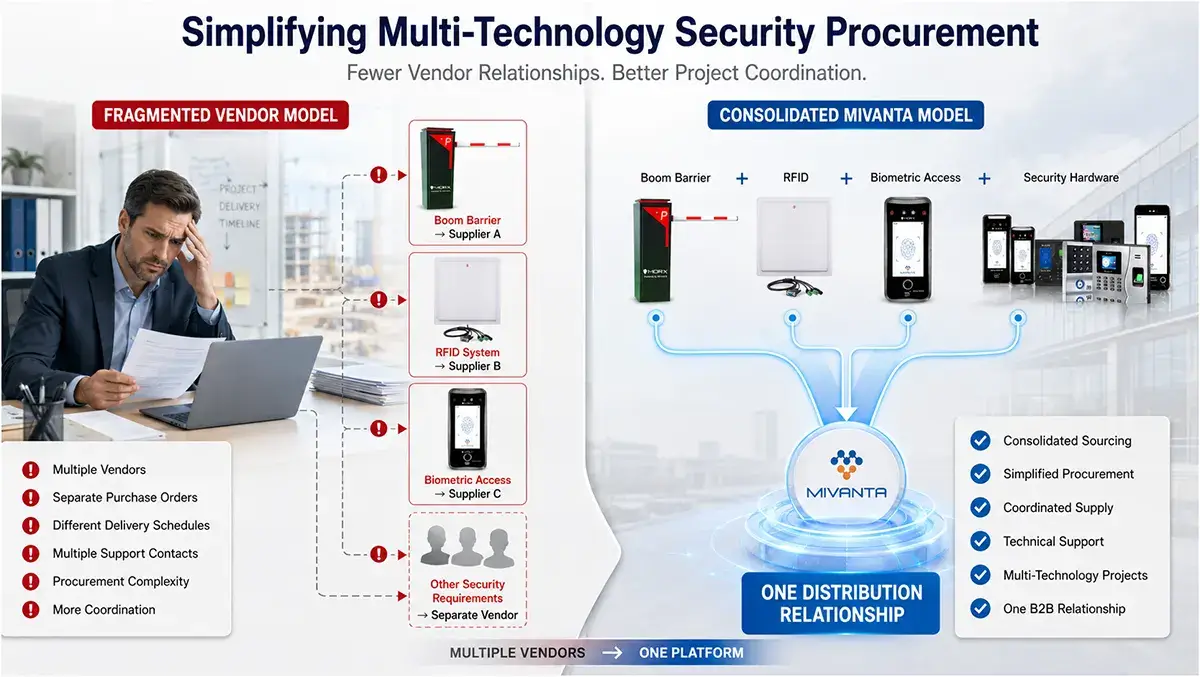
This is where a distribution model built around brand breadth rather than category depth changes the equation. Mivanta distributes across eight brands — Morx, Mantra, Ajax, Dahua, Texecom, Dorset, ACS, and KeyGuard — spanning biometric attendance, UHF RFID, entrance automation, intrusion alarms, digital locks, and smart card readers, all through one procurement relationship.
For a system integrator quoting a project that spans, say, biometric time attendance and UHF RFID for warehouse tracking, sourcing both from the same distributor means one purchase order, one delivery schedule, and one technical support line instead of coordinating between two or three separate suppliers with different lead times and different account managers.
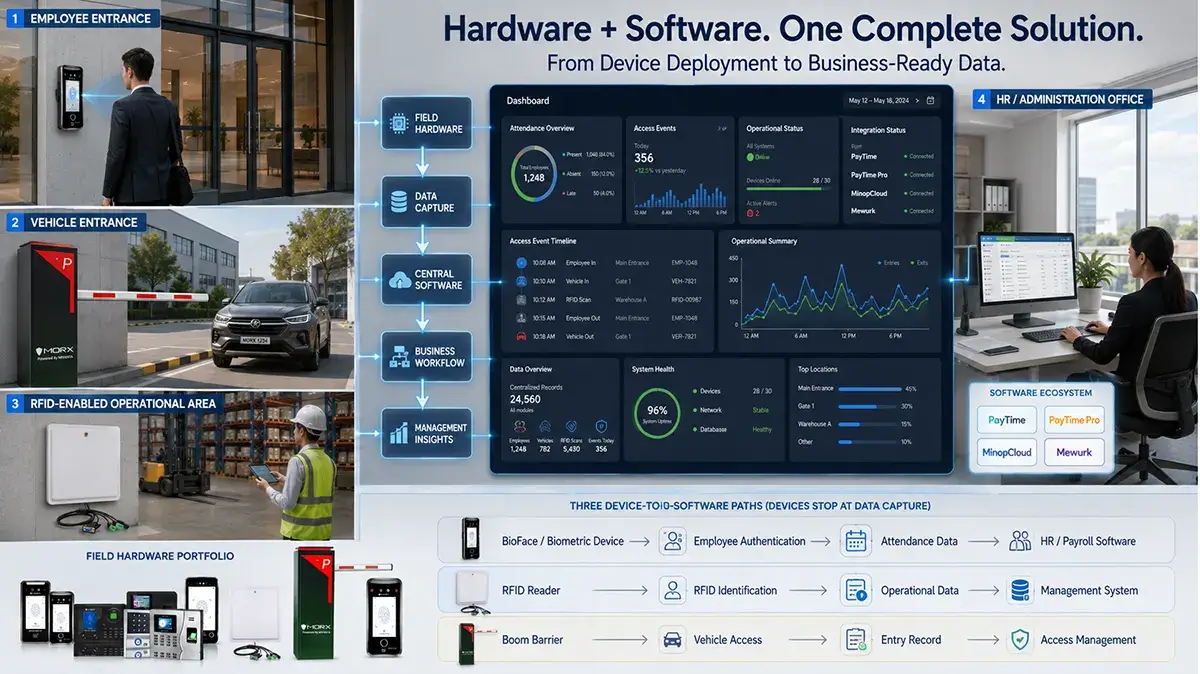
A significant gap in many hardware-only distribution platforms is that the product stops at the device. A biometric attendance terminal gets delivered, and the integrator is left to source or build the software layer that actually turns raw attendance data into usable payroll output — a separate vendor conversation entirely.
Mivanta pairs its hardware range with connected software — PayTime, PayTime Pro, MinopCloud, and Mewurk — so a dealer selling a face recognition attendance system can offer the client a complete working solution, not just a device that needs a second procurement cycle before it delivers actual business value. This matters most for HR-linked deployments, where the software integration is what determines whether the client sees the payroll accuracy improvement they were promised.
Regional or city-focused security suppliers create a specific problem for integrators bidding on multi-location projects — a client with offices in three states needs consistent product availability and support across all three, not a supplier who covers one city well and requires local sourcing elsewhere.
A PAN India distribution network solves this directly, giving dealers and integrators consistent stock availability, pricing, and technical support regardless of which state the project is in — a meaningful advantage when bidding on projects for clients with a multi-location footprint, which is increasingly the norm for corporate, retail, and industrial clients across India.
For a system integrator making a distribution partnership decision, track record isn't a marketing detail — it's a direct risk indicator for whether the supplier will still be reliably supplying stock and support two years into a multi-year AMC contract. Mivanta's 25+ years of operation, over 500 clients served, and 1,800+ completed projects across 10+ countries reflect a distribution history that most single-category or newer platforms simply haven't accumulated yet.
For a dealer choosing between an established multi-brand distributor and a newer, narrower platform, this history translates into a practical question: which supplier is more likely to still have the parts and support available when a client calls back for a repair or expansion three years after installation?
Most competing platforms in the Indian security distribution space fall into one of two patterns: they specialize deeply in a single category — CCTV only, or access control only — leaving integrators to source everything else elsewhere, or they carry broad inventory without the technical depth to support pre-sales consultation on complex, multi-component projects like entrance automation systems that need RFID, ANPR, and barrier hardware working together correctly from day one.
The gap shows up specifically at the project-planning stage — an integrator quoting a complex, multi-technology deployment needs a distributor who can advise on component compatibility across categories, not just sell whatever's in stock within one narrow product line.
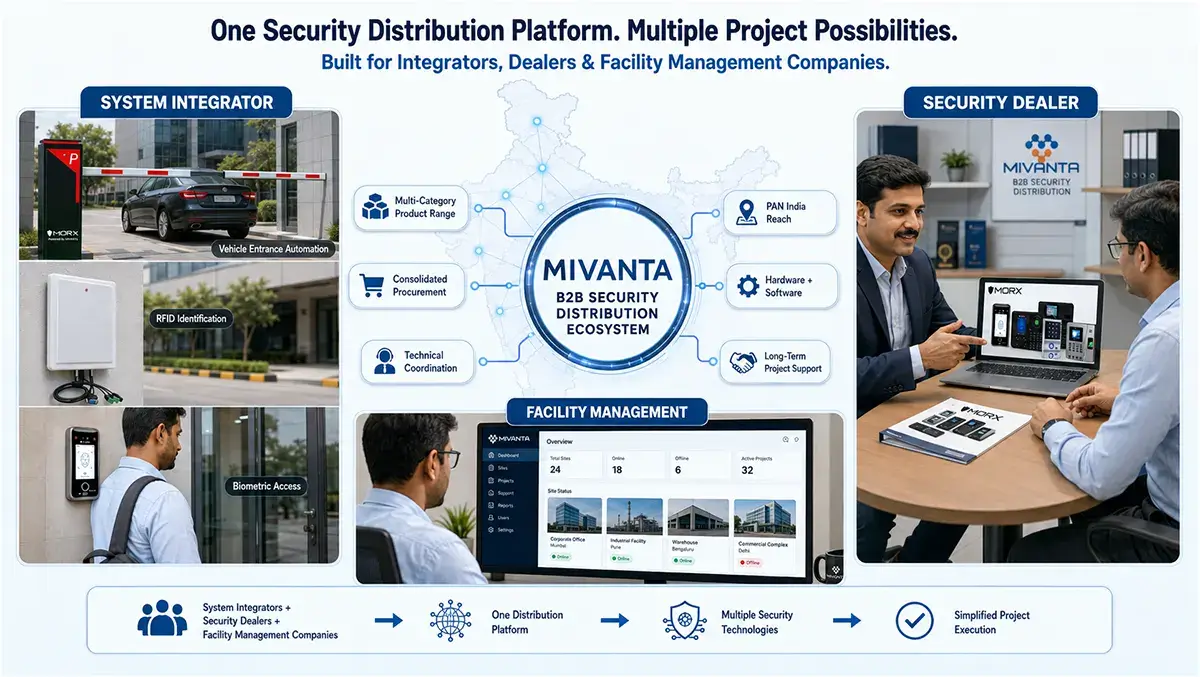
System integrators bidding on multi-category projects benefit most directly — consolidated sourcing reduces the number of vendor relationships per project and simplifies technical coordination when multiple product types need to work together.
Security dealers serving repeat clients across different project types benefit from not needing separate distributor relationships depending on whether the current project is biometric attendance, RFID, or entrance automation.
Companies managing ongoing AMC contracts across client sites benefit from a distributor with the track record and stock reliability to support long-term service commitments, not just the initial installation sale.
No — Mivanta distributes established brands (Morx, Ajax, Dahua, Texecom, Dorset) rather than manufacturing generic hardware under one label, so integrators still access category-specific brand expertise while sourcing everything through one relationship.
Per-unit pricing can occasionally be lower from a category specialist, but the total project cost for an integrator includes procurement time, multiple invoice cycles, and coordination overhead across vendors — costs that a consolidated distribution relationship reduces even when per-unit pricing is comparable.
Yes — this is one of the practical advantages of a multi-category platform. A dealer who starts sourcing biometric attendance devices can add RFID, entrance automation, or intrusion alarm products from the same distributor as project requirements grow, without establishing a new vendor relationship each time.
Even dealers serving primarily local clients benefit from PAN India stock reliability — consistent supply chain depth means fewer delays and better availability, since the distributor isn't dependent on a single regional warehouse.
Mivanta supplies system integrators and security dealers across India with multi-brand hardware and connected software through a single B2B distribution relationship. Explore the complete product range or contact our sales team to discuss partnership terms for your project pipeline.

Subscribe to our emails about secure life. No spam.